
Tax planning meeting agenda: run a consultation that ends in a decision
A tax planning meeting agenda should leave the tax professional and prospective client with a clear scope decision, unanswered questions and an agreed next step. The five-part, 45-minute example below covers preparation, changed facts, dated issues, scope and fee. Adjust its timing to the assignment; send terms only when the proposed work and acceptance conditions are ready.
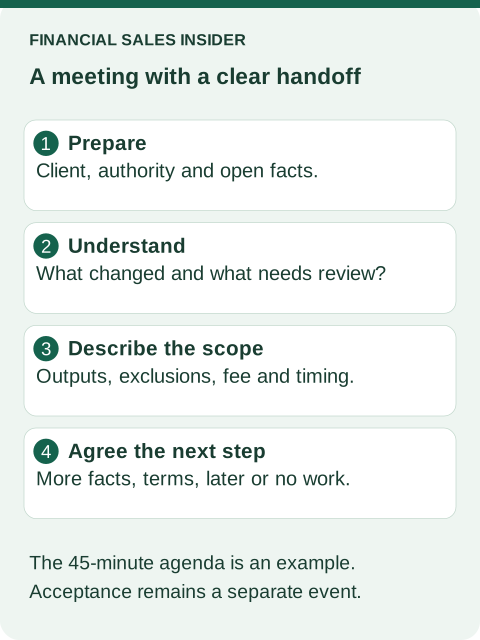
A useful outcome can be a proposed engagement, a declined assignment or a request for missing facts. A client can take time to decide. Record a follow-up date only if both sides agree.
Before the meeting: 15 minutes of prep
Read what you already know. If the owner answered fit questions when they booked, you have their entity type, a profit band, states and the reason they're looking. Write three things on your meeting sheet:
- Their trigger, in their words.
- The next applicable date. Check the taxpayer, year, payment history, intended action and actual calendar. Usual estimated-tax dates have adjustments and exceptions; do not presume January 15 is every owner's next obligation (IRS, estimated taxes).
- Two areas you expect to look at, such as owner pay and retirement.
Identify the prospective client, who can authorize the work and who can supply missing facts. Invite additional people with permission where their involvement is needed; not every owner must attend every meeting.
Who should be in the room
Agree who needs to participate for the proposed scope. A second focused meeting can be appropriate when authority, personal circumstances or confidential interests require it.
For representation before the IRS, 31 CFR 10.29 addresses direct adversity and material-limitation conflicts. Proceeding despite a conflict requires the section's conditions, including a reasonable belief in competent, diligent representation, no legal prohibition and informed consent from every affected client. Consent is required when the conflict is known, with written confirmation within the stated period, no later than 30 days; retain it for at least 36 months after representation concludes. Attendance does not cure a conflict, and a generic engagement clause is not a substitute for the actual assessment.
The 45-minute tax planning meeting agenda
| Minutes | Part | What you do |
|---|---|---|
| 0 to 3 | Frame | Explain this meeting's scope and when a supported recommendation could be given |
| 3 to 20 | What changed | Ask about the business, the trigger and what it cost them |
| 20 to 30 | The next decision | Name the dated decisions you'd settle first |
| 30 to 40 | Scope and fee | Describe the engagement and give the fee |
| 40 to 45 | Decision | Agree yes, no, or a date to decide |
0 to 3 minutes: set the frame
"Here's how today works. I'll ask about your business and what you paid last year. I'll show you where I'd look, and if it makes sense, I'll tell you what a plan covers and what it costs. You can say no at the end and that's fine."
Saying "no is fine" out loud makes the end of the meeting easier for both of you. Our guide to stopping free advice has the full wording.
3 to 20 minutes: what changed
Listen more than you talk. Use the question groups in our consultation questions guide. Use this part to establish what changed, what they paid and when, how they pay themselves and what they want different next year.
20 to 30 minutes: the next decision
This is the part that's easiest to skip. Name two or three decisions and attach a date to each.
"From what you've said, I would review owner pay, the next applicable estimated payment and whether an entity-election review is warranted. We need to confirm your records and actual dates before recommending an action."
The Form 2553 instructions generally allow filing no more than 2 months and 15 days after the start of the tax year the election is to take effect, or during the preceding tax year. Eligibility, the first tax year, required consents and late-election relief can change the analysis. Identify the actual case rather than treating this sentence as a recommendation or universal cutoff.
30 to 40 minutes: scope and fee
Describe what the engagement covers, in one or two sentences per item, then give the fee. Offer a smaller first step if the full scope is more than they need. Explain how the fee changes with scope; pricing choices remain yours. Our fee objection guide covers the conversation when they push back.
40 to 45 minutes: the decision
Ask directly. "Would you like to go ahead?"
- Yes: "I will send the proposed terms by [agreed date], subject to our acceptance checks. We will agree a secure route for the records needed, including any limited records required to decide scope."
- No: thank them and ask one question: "What would have made this a yes?" Write down the answer.
- Not yet: "When would you be ready to decide?" Offer an agreed follow-up date without treating hesitation as consent.
The second meeting
Some owners need a second conversation, usually because a partner or spouse wasn't there. Treat it as short and specific. Recap the decisions and dates, answer the new person's questions, and ask for a decision at the end. Don't run the full first meeting again.
The same day
- Send agreed next steps. Provide proposed terms when scope and acceptance checks are ready, with unresolved facts marked.
- Send a short summary of what you heard and the dates. Leave recommendations out of it.
- Put the follow-up date in your calendar if they said "not yet."
- Write down their trigger and objections in your notes for next time.
Our guide on proposals and engagement letters covers what the letter should include.
Keep the meeting handoff clear
Use a length your team can prepare for and deliver. Send an invite and expected reminders, then leave the technical review, fee and acceptance decision with the responsible professional.
Where to start this week
- Copy the 45-minute agenda into your meeting template.
- Add a line for "next IRS date" to your prep sheet.
- Confirm client identity, authority and who should participate; assess conflicts separately.
- Write the three closing answers (yes, no, not yet) on a card and keep it in view.
- Draft your engagement letter template so it can go out the same day.
Before your next meeting, check the agenda against these tax planning consultation mistakes.
Questions firm owners ask
How long should a tax planning consultation be? Long enough to learn the facts, name the next decisions and give a fee, with a few minutes left to decide. A 45-minute meeting in five parts works if you prepare from the owner's answers beforehand.
What should be on a tax planning meeting agenda? Set the frame, learn what changed in the business, name the next dated decisions, describe scope and fee, and agree a yes, a no or a date to decide.
Should both business partners attend the first planning meeting? Invite the people needed for the proposed decision, with appropriate permission. Authority, confidentiality and conflict checks are separate; neither attendance nor an engagement letter automatically resolves a conflict.
What should I send after a tax planning consultation? Send the agreed summary, unanswered questions and next step. Supply scope and fee terms when ready; use a secure channel for any necessary records. A same-day target is an operational choice, not a rule requiring immediate acceptance.
Sources
Selected claims and editorial wording reviewed November 4, 2026 against the linked primary guidance. Source publications retain their stated years and scope. This is a professional workflow aid, not an individual tax determination or a ready-to-use legal agreement.
- IRS, estimated tax due dates (FAQ)
- IRS, instructions for Form 2553
- 31 CFR 10.29, conflicting interests (eCFR)
Related: Consultation questions · Stop giving free advice · Proposal or engagement letter?