
How to answer the tax planning fee objection: "your fee is too high"
When a prospective client questions a tax planning fee, ask what they are comparing: scope, deliverables, timing, cash flow or another offer. Explain the proposed work and unresolved facts before discussing an adjustment. A smaller assignment can be an option when useful; a firm can also change pricing honestly without implying that its original quote was false.
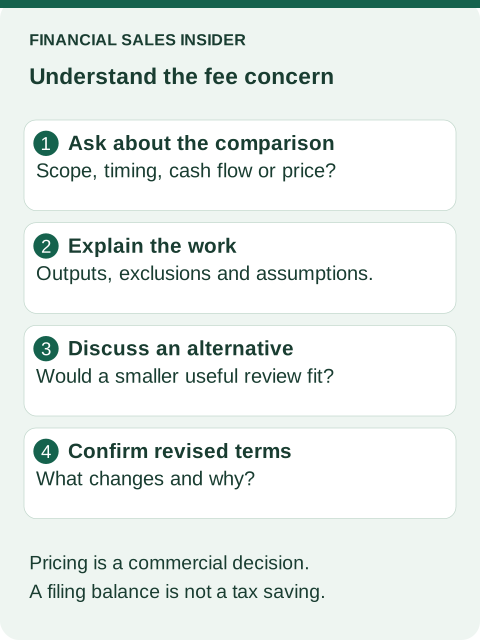
Do not answer a fee concern with an unreviewed promise to charge only from a saving. Section 10.27 defines certain result-based fees and reimbursement arrangements as contingent fees for IRS matters, including planning and advice, and has stated exceptions. Have the actual service, fee terms and governing law reviewed. This guide does not determine whether a particular arrangement is permissible.
What a tax planning fee objection can mean
When an owner says the fee is too high, they are telling you one of four things.
- They're comparing it to their return fee. Prep has a familiar price. Planning is new to them, so the only number they have is what they paid last spring.
- They can't see what changes. If you haven't named the decisions the plan will settle, the fee buys something vague.
- The timing is off. They believe the fee but the cash isn't there this month.
- They want a lower price and are testing you. Some owners ask everyone.
Each one needs a different answer, so ask before you respond:
"That's fair to raise. What are you comparing it to?"
Then stop talking and listen. The answer tells you which of the four you're dealing with.
Answers that work for each one
Compared with the return fee
"Your return records what already happened. Planning changes what happens next: how you pay yourself, what you set aside each quarter, and which decisions you make before December 31. They're two different jobs, priced separately."
Can't see what changes
Name the issues that actually need review and verify their dates. For example: "The proposed work would review owner pay, reconcile estimates and assess whether a retirement-plan review is appropriate." Do not presume a missed installment, available deduction or year-end deadline from a sales conversation.
Timing
If the agreed scope and total remain appropriate, a payment schedule may address a cash-flow concern. Explain the terms and confirm whether any change in timing affects delivery. The firm can also revise its quote honestly when the facts or commercial terms change.
Testing
If you choose to keep the quoted rate, say: "That is our fee for this scope. A smaller review may suit the decision you need to make first." Describe what the alternative includes and excludes. It is also reasonable to decline unsuitable work rather than invent a cheaper service.
Offer a smaller scope when it fits
Explain any revised quote truthfully, including changed assumptions, scope or commercial terms. Do not imply a discount proves dishonesty or that keeping a rate unchanged is a professional rule.
Where a smaller assignment answers a useful question, compare it with the broader scope. One possible ladder is:
| Option | What it covers |
|---|---|
| Full year | Plan, quarterly check-ins, estimated payment amounts, year-end review |
| Single plan | One written plan and one review meeting |
| First step | A fixed-fee review of one decision, such as owner pay or entity type |
Discuss which scope, if any, fits the actual need. Holding a rate while reducing scope is one pricing approach; any revised fee should be explained truthfully. Our one-time plan versus retainer guide covers that service distinction.
Show the cost of waiting, with their numbers
Owners weigh your fee against doing nothing. Make doing nothing visible.
An amount due at filing does not by itself show late payment or the cost of declining your service. The IRS publishes interest rates quarterly; the ordinary underpayment rate for the fourth quarter of 2026 is 7%. Estimated-tax underpayment penalties have their own payment, timing and exception rules. Review actual withholding, estimates, credits and liabilities before describing a cost (quarterly rates, estimated taxes).
Illustrative $40,000 filing balance: An owner remembers paying $40,000 with a return and no separate estimates. That does not establish total tax, missing withholding, required installments or a penalty. Ask for the relevant return and payment history through an agreed secure route. Explain whether the proposed work includes reviewing payment timing, calculating future estimates or correcting earlier reporting. Comparing your fee with the $40,000 check is not evidence of a saving or value delivered.
Never turn this into a promise of what they'll save. See our guide on selling planning without promising a savings number.
When to give the price
Before the meeting: if an owner asks what planning costs before they'll book, give a range and what drives it. "Planning engagements here start at [your single-plan fee]. The final fee depends on the number of entities and states." Refusing to say anything reads as hiding something.
In the meeting: give the exact planning fee once you've named the decisions the plan will cover, and never before you know their entity type, states and number of owners.
In writing: put the fee and scope in the engagement letter the same day. A fee that stays verbal gets renegotiated.
When they're comparing you with another firm
Ask about the scope first. "What does their engagement include?" If the other offer covers a written plan and one meeting, compare that with your single-plan option. If it includes a projected saving, ask about its baseline, assumptions and conditions. Compare a supported estimate separately from a guarantee or result-based fee.
Don't criticise the other firm. Compare what each engagement covers.
Where to start this week
- Write your three-level scope ladder with a fixed total for each level.
- Add a one-line price range to your booking confirmation.
- Practise "What are you comparing it to?" until you can say it and stop talking.
- Add a place to record the actual taxpayer, tax year, payment history and verified next date.
- Remove any wording from your site or proposals that ties your fee to savings.
Questions firm owners ask
How should a tax firm explain the price behind a fee objection? It depends on the scope: the number of entities, owners and states, and whether you deliver one plan or a year of check-ins. Set fixed fees for each scope level and give owners a range before they book.
Can I charge a percentage of the tax I save a client? Circular 230 section 10.27 defines a contingent fee to include one based on a percentage of the taxes saved, and it covers tax planning and advice. Outside narrow exceptions for examinations, certain refund claims and court cases, practitioners may not charge contingent fees.
Should I lower my fee after a tax planning fee objection? Consider whether the concern is scope, timing or price. A smaller useful assignment may fit; any revised quote should state what changes and why. Keeping the rate unchanged is a commercial choice, not a rule.
When should I tell a prospect my tax planning fee? Give a range before the meeting if asked, the exact fee once you've named the decisions the plan covers, and the fee and scope in writing in the engagement letter the same day.
Sources
Selected claims and editorial wording reviewed November 4, 2026 against the linked primary guidance. Source publications retain their stated years and scope. This is a professional workflow aid, not an individual tax determination or a ready-to-use legal agreement.
- 31 CFR 10.27, fees and contingent fees (eCFR)
- IRS, quarterly interest rates
- IRS, estimated tax due dates (FAQ)
Related: One-time plan or retainer? · Other objections owners raise · Selling planning without promising a savings number