
IRS notice and letter help: identify the issue before choosing a response
An IRS notice can concern a balance, a proposed change, identity verification, a refund or another account matter. It does not automatically mean an audit or a debt that needs negotiating. The first task is to identify the letter, the tax period, the requested action and the actual response date.
Keep every page and the envelope. Read the whole notice before paying, agreeing to a change or sending documents. This guide explains a federal triage process; the particular notice and its current official instructions determine the next step.
Start with five details from the notice
| Detail | What to record |
|---|---|
| Issuing agency | IRS, a state revenue agency or another authority |
| Notice or letter code | The CP or LTR identifier, rather than only the headline |
| Taxpayer and period | Person or entity named, return type where shown, and tax year or period |
| Requested action | Pay, verify identity, provide information, review a proposed change or something else |
| Date and procedure | Actual response or payment date, any appeal or court language and the instructed reply method |
The IRS's notice and letter centre explains common reasons for correspondence and provides a notice-code search. Use the exact code, then compare the official explanation with your complete letter. A general article should not override instructions that apply to your situation.
An individual notice and one addressed to a business may concern different accounts even when the owner is the same person. Keep entity and personal correspondence separate and identify who handles each.
Check the source before sharing information or paying
If the correspondence seems suspicious, verify it independently through IRS.gov or the agency's official contact guidance. Do not rely solely on a phone number, payment link or QR code in an unexpected message. Check the actual destination before entering identity or account details.
If you have an IRS online account, relevant account information may help your review, but the absence of a particular letter online is not, by itself, a complete authenticity test. Use the IRS's instructions for the notice or suspected scam.
When asking a professional for an initial assessment, describe the code, issue, year and date without posting your Social Security number, EIN, account number or unredacted notice publicly. Arrange a secure method for the complete copy and supporting records.
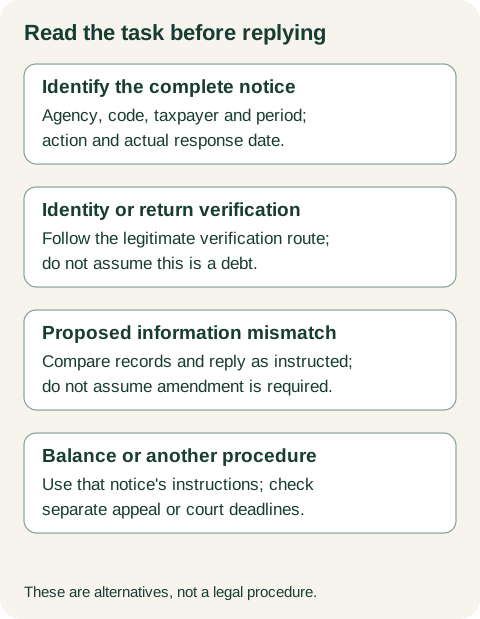
Distinguish the task the letter is asking you to complete
A balance-due notice
For example, the CP14 explanation concerns an amount the IRS says is unpaid. Compare the tax period and balance with the filed return, payment records and prior correspondence. Identify a payment you believe is missing or incorrectly applied rather than assuming the amount is right or wrong from the total alone.
Follow the notice's instructions for agreement, disagreement or payment options. If you cannot pay in full, examine the actual official options for your circumstances. A private company's promise of a reduction is not evidence that you qualify for one.
A proposed information mismatch
The CP2000 series concerns differences between third-party information and the filed return. It proposes changes and is not itself a bill. Compare the identified items with the return and the underlying statements, including any corrected documents.
Use the response form or other instructions provided and explain agreement or disagreement with appropriate evidence. Do not assume the response is an amended return. The IRS says no amendment is needed when you agree and have no other income, credits or expenses to report; other facts require the applicable instructions and assessment.
Identity or return verification
The CP5071 series, which includes 5071C letters, asks for identity and return verification. Follow the actual notice's legitimate verification route and prepare the records it requests. If you did not file the return, that is information to address through the verification process.
Do not treat an identity letter as an ordinary debt bill or assume paying someone resolves the verification. The IRS explains that the contact route for this series concerns identity and return verification, rather than every other account question.
An examination, deficiency, appeal or collection stage
These terms can describe different procedures and rights. Identify the exact letter, requested records and any separate appeal or court deadline. Do not generalise the procedure for a mismatch notice to an examination or a notice of deficiency.
If the notice refers to Tax Court, a proposed levy, a lien, a hearing or another contested stage, establish promptly what response is required and whether appropriately qualified representation is needed. A general triage page cannot determine the rights or best response in an individual dispute.
An information or business-identification letter
Some correspondence supplies or confirms information rather than asking for payment. An EIN confirmation or verification letter, for example, should not be classified as a tax debt just because it came from the IRS. Read the purpose and requested action before selecting a service.
Treat each actual deadline as a separate task
Record the date and the action associated with it. A payment date, a request for documents, an administrative appeal and a court petition may have different requirements. Assign responsibility and leave enough time to use the permitted filing or delivery method.
Do not assume that a phone call, a reply sent to the IRS or a request for more time changes a court deadline. The US Tax Court's starting-a-case guidance distinguishes the deadlines for different cases and explains its strict deficiency-petition filing limit. The IRS also states, for CP3219N, that filing a return does not extend the time to petition.
If a deadline is close, unclear or appears to have passed, establish the applicable options promptly with an appropriate professional or the official procedure. Do not wait for a routine preparation appointment on the assumption that correspondence will preserve every right. This guide does not calculate a legal deadline or promise that an extension is available.
Assemble a response record, not an unsorted document dump
Keep the original notice intact. Build a working file with the complete letter, the relevant filed return, statements or records for the questioned item, payment evidence where relevant and earlier correspondence about the same issue.
Write a short chronology of what happened and what remains disputed. Distinguish an original statement from a correction, an amount calculated from a payment actually made, and a draft return from the version filed. Those distinctions help prevent a response to the wrong facts.
When a preparer or representative takes the assignment, agree:
- Which taxpayer, notice and stage they have accepted.
- What records they need and who obtains missing information.
- Who prepares, reviews and sends the response.
- Which authorisation is required for communication or representation.
- Who monitors acknowledgement and later correspondence.
- What would require an additional engagement.
These are practical coordination questions. They do not replace the notice's requirements or confer representation authority.
Choose help for the actual notice work
Ask the preparer of the original return whether they handle the issue and whether the existing agreement covers it. A preparation fee does not automatically include amendments, appeals or representation. If another person takes over, agree the secure transfer of relevant returns and correspondence.
The CPA, EA and tax preparer guide explains different credentials and representation limits. The tax attorney versus CPA guide separates IRS representation from court admission. Check current status, experience and the actual agreed work rather than assuming every letter needs an attorney or every preparer handles disputes.
For eligible taxpayers, the IRS notice centre also links to the Taxpayer Advocate Service and Low Income Taxpayer Clinics. Their roles and eligibility differ. Check the relevant programme; do not assume free representation, immediate acceptance or an automatic pause in deadlines.
Send the response through the instructed route and track what follows
Use the current instructions for that notice. Retain a copy of what was sent and available confirmation or delivery evidence. Record who sent it, when and for which taxpayer, period and issue. A draft in a portal is not evidence that a response reached the agency.
Track subsequent correspondence and give it to the responsible person. A response, payment or acknowledgement does not necessarily close every issue. Ask what would demonstrate completion and whether a separate year, entity or state matter remains open.
If the letter is from a state agency, use that state's official instructions and dates. A federal response should not be assumed to satisfy the state even when both letters concern the same transaction.
Questions about IRS notice help
Does every IRS notice mean I owe more tax?
No. Correspondence can concern identity, information, a refund or a proposed change as well as an unpaid amount. Identify the exact code and requested action before deciding how to respond.
Should I amend my return as soon as I get a letter?
No automatic rule applies. Read the actual instructions and establish what is wrong, if anything. A CP2000 response, for example, is not automatically an amendment. Sending a different document without following the notice procedure can leave the actual task unresolved.
Is the issue finished once I have replied?
Not necessarily. Keep response evidence, monitor later correspondence and confirm what remains outstanding. The completion test depends on the notice and stage, rather than a general promise of resolution in a fixed number of days.