
Tax preparation in Rye for individuals and businesses
Choose the work you need: a personal or family return, business-return preparation, or analysis of a future decision. These can be separate assignments. Ordinary filers can use this guide without owning a company or meeting an income threshold.
On this page
- Personal tax preparation in Rye
- Business tax preparation in Rye
- Compare official filing options and paid preparation
- Agree review, submission and follow-up
- Business Tax Planning in Rye, NY
- Map the income sources behind your business-owner position
- Compare Rye-area offers beyond the high-income label
- Ask how the business and personal assumptions will be reconciled
- Name the work and the responsible provider
- Questions Rye business owners can use
- Keep the assignment and outstanding work clear
- Sources and review date
Personal tax preparation in Rye
Rye personal tax preparation can cover ordinary wages or retirement income as well as more complex sources. Name the year, federal and New York returns, other states and missing information. Where employment equity, business interests or investments are present, identify the actual documents and events. A high-income service label does not define the work your return needs.
Business tax preparation in Rye
For business preparation, identify the actual entities, tax classifications, owners, periods and records. Agree who prepares the company returns and sends final information to the personal preparer. Ask whether an employment-equity question or another income source needs separate review. Confirm the contracting provider for each assignment rather than assume every service under a brand belongs to one engagement.
Compare official filing options and paid preparation
Compare the whole return with the supported work, year and current opening arrangements of any free or self-service option. New York's filing resource center provides official filing and assistance routes. Its Taxpayer Assistance Program distinguishes seasonal guided sessions from supported software and follow-up access. TAP's 2026 guided assistance season has ended. Software access is a separate option with its own conditions. Check the current supported year and eligibility rather than assume that an old schedule provides an appointment.
For paid preparation in Rye, compare the same actual return facts, fee inclusions, record corrections, reviewer and delivery arrangements. Confirm whether the service is in the locality, nearby or remote. A city name, service-area page or published menu does not verify an office boundary, professional status or current availability. The New York help page provides the state-level filing and agency distinctions.
Agree review, submission and follow-up
Establish a secure route for documents and an explicit list of missing information. Agree who prepares each return, who reviews it, how you check the draft and authorize submission, and who confirms acceptance or handles a rejection. Keep final copies, payment instructions and evidence with the actual taxpayer and year. Filing and paying are separate steps.
The personal preparation guide explains the general completion process; the business preparation guide separates entity and owner handoffs. If the immediate task is a letter, identify its actual issuing agency, period and requested action. The IRS notice guide concerns federal correspondence; the New York notice section keeps state and other issuers separate. Confirm the response assignment rather than assume annual preparation includes it.
Business Tax Planning in Rye, NY
A business owner's personal tax position can include more than the operating company. Employment, equity compensation, investments and interests in other entities may also need attention. When comparing tax help in Rye, establish which of those sources the engagement will connect to the business decision you want reviewed.
A high-income employee service can overlap an owner's needs, but its label does not define the business assignment.
Map the income sources behind your business-owner position
Start with the operating business and the decision requiring analysis. Then identify other income sources that are actually present. Do not add complexity simply because a firm's website lists sophisticated services.
| Source, where applicable | Information to identify | Scope question |
|---|---|---|
| Operating-business interest | Entity, ownership, returns and current figures | Who analyzes the company decision and its owner effects? |
| Employment or equity compensation | Employer documents, award information and relevant dates | Is this included in the personal review, and who assesses the unanswered treatment questions? |
| Other entity interests | Issuing entity and relevant records | Which information is still needed before the combined analysis? |
| Investments or other personal income | Actual statements and contemplated changes | Which assumptions enter the owner projection? |
The map identifies information and responsibility. It does not determine the tax treatment of a payment or suggest that similar-looking documents should be treated identically. Ask the adviser to identify the records needed for your actual facts.
Compare Rye-area offers beyond the high-income label
Three inspected descriptions illustrate different combinations of work. These are attributed research examples, not rankings, verified FSI partners or confirmation of capacity.
| Description inspected | Relevant emphasis | What to clarify |
|---|---|---|
| Alex Bayer tax planning | Business owners, professionals and high-net-worth individuals, with broader planning and entity topics | Which company decisions and personal income sources are included? |
| AP Accounting & Tax planning | Separate references to W-2/equity-compensated individuals and entrepreneurs/S corporation shareholders | How does the proposed engagement connect business advisory and complex personal work? |
| Revonary's Rye Brook page | Business tax, accounting, financial analysis and related services | Which provider and reviewer supply each required output? |
Bayer's offer lists a Rye address. AP explicitly names Rye among the areas it serves while describing a Fairfield County base. Revonary describes a Rye Brook location and tri-state audience. Rye city, Rye town and Rye Brook should not be treated as interchangeable office locations. These observations do not independently verify an office boundary or current availability. [1][2][3]
Revonary's page also distinguishes its tax/business consulting and attest-service entities. Identify the provider on your own proposal; do not assume that every service under a brand is one engagement. No audit or other attest need is established by this guide. [3]
Bayer and AP descriptions were available through retrieved web copies when direct access was unsuccessful. Confirm current services and responsible people. Website strategy lists and testimonials do not establish a result for your situation.
Ask how the business and personal assumptions will be reconciled
Give the prospective adviser one factual decision summary alongside the income map. Explain the proposed company action, other relevant personal decisions and dates, and which matters remain uncertain. Separate a completed event from an action you are considering.
Request an analysis that makes each relevant stream visible. Which company results support the owner's position? Which employer or investment documents supply additional facts? What has been assumed because information is missing? The useful output explains how those inputs fit together rather than merely confirming that several returns can be prepared.
For an owner with employment or equity compensation, ask whether that work is included in the personal assignment and whether separate technical review is needed. Do not infer that a business-tax proposal covers an employer award, or that a personal compensation service covers the operating company's decision.
New York's public-accountancy consumer guidance says professionals should explain the basis of assumptions and identify reasonable alternatives. Use that expectation to ask for a clear baseline, the proposed change and the unresolved questions. This is a request for analysis, not a recommendation to exercise an award, alter compensation or choose a particular entity. [4]
Name the work and the responsible provider
Compare proposals against the same actual sources and decision. Look for the entities and individuals covered, required inputs, responsible reviewer, deliverable and exclusions. Ask who connects the business findings with the personal review and what happens if new information changes an assumption.
New York's consumer guidance also addresses written services, expected timing and the fee basis. Verify the relevant professional status separately. The IRS gives CPAs, enrolled agents and attorneys unlimited IRS representation rights, but those rights do not establish every planning specialty or include representation in a quoted fee. [4][5]
Questions Rye business owners can use
Does a high-income personal tax offer include my business planning?
The label does not establish the business assignment. Identify the operating entities, owner decision and other income sources, then ask which are analyzed together. AP's offer separates individual and business subjects; Bayer spans several client categories. Request explicit inclusions and exclusions rather than infer them from those labels. [1][2]
What should I prepare if I have business income and employment or equity compensation?
Prepare the applicable entity and payer records, employer/equity documents and relevant dates, alongside current business figures and the contemplated action. Ask what further evidence is needed and how each source enters the combined analysis. These inputs do not themselves determine treatment or the right action. [2][4]
Can one brand cover tax advice and other accounting services?
It may describe several services, but identify the contracting provider and reviewer for your work. Revonary explicitly separates attest services from tax/business consulting entities. Ask which engagement supplies each needed output; the disclosure is an attributed provider statement, not FSI verification of registration or a conclusion that you need an audit. [3][4]
Keep the assignment and outstanding work clear
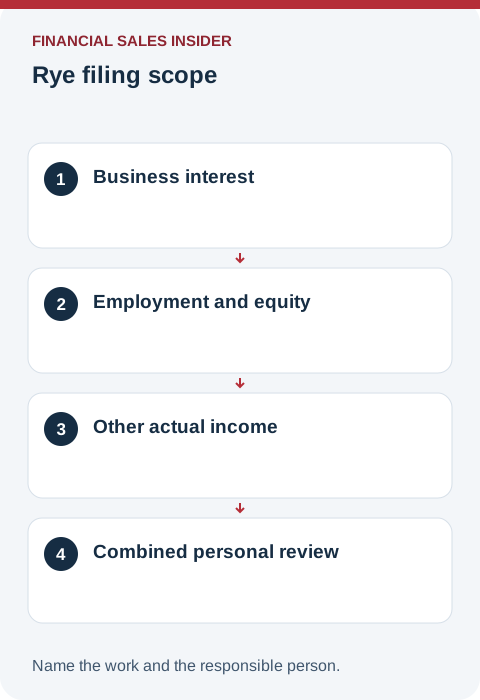
Keep a record of the actual taxpayer, year, work accepted and person responsible. For this assignment, distinguish business interest, employment and equity, other actual income, combined personal review. Identify open questions and the evidence needed to close them, with filing status and payment records kept separately.
Sources and review date
Sources checked October 30, 2026. Practice descriptions are attributed observations, not tax authority, independently verified credentials or current capacity.