
Tax preparation in Lincoln for individuals and businesses
Start with the return you need completed, then define any additional review. Personal filing, company preparation and the specialist work below can be separate assignments.
Personal tax preparation in Lincoln
For a household return, identify the tax year, income records, family changes and relevant states. Wages, retirement or self-employed work can be the full assignment. If farm information is involved, ask which records the preparer needs without assuming every reader owns land, uses the cash method or files the same return.
Business tax preparation in Lincoln
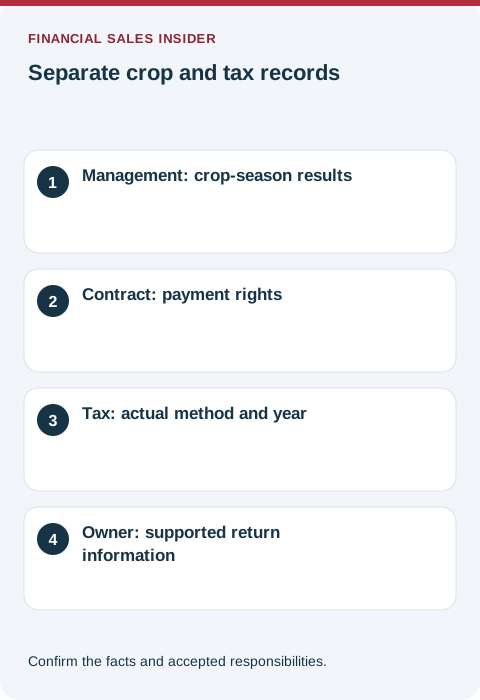
Name the farm or other business taxpayer, actual classification, accounting method, periods and accepted returns. Separate crop-season management reports from the records used for tax preparation. Ask who reviews grain payment rights, explains the applicable-year conclusion and supplies final information to the owner preparer. A proposed timing change needs separate analysis and implementation scope.
Compare filing options and completion
For a straightforward personal return, IRS VITA/TCE assistance is one route to check. Confirm the actual site's supported work, tax year, eligibility and current arrangements. IRS Free File has separate partner, form, state and filing-year conditions; check current availability before starting. Neither route establishes help with every business return. The Illinois individual preparation section gives state context.
Compare paid quotes using the same returns, years, states and record condition. Agree a secure document route, the preparer and reviewer, and how missing information or extra work is approved. Review the draft before authorizing filing. Name who confirms acceptance or resolves a rejection, supplies final copies and explains payment responsibilities. A submitted return does not prove that a balance was paid. The personal preparation guide and business preparation guide develop those handoffs.
If a letter is the immediate issue, identify its actual issuer, period, instructions and date. The IRS notice guide concerns federal correspondence; Illinois notice help distinguishes the state route. Ask whether response or representation work is included rather than assuming annual preparation covers it.
Business tax planning in Lincoln for farm owners
A farm can show a strong crop-season result while the owner faces a different tax-year and cash position. Grain remaining in storage, delivery agreements, available payments and operating debt can each change the questions a tax adviser needs to answer. Compare the professional work connecting those facts before agreeing to a timing strategy.
This guide helps Lincoln farm owners compare the expertise and deliverables needed for a joined business and owner assessment.
Separate the crop season from the tax-year assessment
Lincoln's agricultural service market includes different kinds of work. The Lincoln office of Farm Business Farm Management describes accrual income statements, production analysis, cash-flow information and tax services. Klemm's agricultural service description includes year-end planning and monthly records with Schedule F output. These are published service descriptions, so confirm the actual proposed scope directly.
Ask a candidate adviser to identify which reports explain farm performance and which support tax reporting. A management statement built to compare production periods does not, by itself, establish the accounting method used on the return. Equally, a tax return does not explain every working-capital movement in the crop cycle.
Prepare an initial schedule of the entities, owners, crop periods and tax years involved. Identify who currently prepares management accounts, books and returns. Ask who will explain the adjustments connecting those records. Do not assume that every agricultural entity uses the cash method or files Schedule F because a provider offers that service.
The useful output is a clear starting point: the records relied on, the tax method being assessed and the differences still needing investigation. If an adviser proposes changing a method, request a separate explanation of the applicable requirements and implementation work before treating a change as agreed.
Ask how grain contracts and payment rights are reviewed
The IRS 2025 Farmer's Tax Guide, in its accounting-methods chapter, distinguishes cash and accrual methods and explains actual and constructive receipt. Its cash-method discussion makes payment availability and contractual rights relevant. It does not support choosing a tax year simply by leaving an available check unbanked.
Give the professional the actual grain contracts and settlement records. Identify what remains unsold, what has been sold, delivery dates, payment dates and any conditions on obtaining the proceeds. A spreadsheet showing bank deposits alone may omit a right to payment that the adviser needs to assess.
Ask how the analysis handles differences between a contract requiring future payment and a payment already available without restriction. Request the facts and source supporting the conclusion for your entity and tax year. The cited guide is the 2025 edition; its dated numerical thresholds should not be assumed to establish a later year's eligibility.
Keep commercial choices separate from tax conclusions. A delivery or payment arrangement may also affect pricing, counterparty exposure and access to working capital. Ask which questions the tax firm handles and when an attorney or another specialist needs to interpret an agreement. Do not change contract terms merely to match an unexplained tax-saving target.
Connect farm liquidity with the owner projection
Request a comparative cash schedule using the actual options still available. Start with expected collections under the existing contracts. Then identify what changes if payment timing, delivery or market assumptions change. Label agreed terms, forecasts and unresolved tax treatment separately.
For each case, show the farm's operating obligations: debt payments, rent, payroll where relevant, storage costs and funds needed for the next crop. Ask which commitments fall due before the expected collections. A lower projected tax amount would not explain how the farm meets an earlier cash requirement.
Bring the owner position into the same sequence. Identify proposed draws or distributions, personal tax payments and funds the owner expects to contribute. Ask the adviser to distinguish taxable income from available cash and explain how the business and personal analyses connect for the actual structure.
Agree on a review trigger. If a grain buyer changes a settlement date, a contract is amended or operating costs rise, identify who updates the schedule and checks whether the tax assumptions still hold. The owner should receive an explanation of the changed decision, rather than another isolated projection with no connection to the earlier plan.
Compare agricultural planning deliverables
Ask prospective firms about work with a farm operation and ownership arrangement resembling yours. Request an explanation of how they review management reports, grain contracts and payment records, without seeking another client's confidential information. Relevant experience includes the particular assignment, rather than agricultural returns in general.
Put responsibilities into the proposal. Identify who establishes the starting tax method, obtains contracts, assesses payment rights, prepares the farm and owner projections and checks approved actions. If another provider keeps the books or handles management analysis, specify the information exchange and who resolves differences.
Compare fees using the same crop, entity and owner schedule. Clarify whether the quote includes technical contract review, accounting adjustments, personal returns, updates and implementation, or whether some work needs a separate engagement. The business tax planning fees guide explains how to compare deliverables and exclusions.
Check applicable professional records through Illinois license lookup. The IRS credential guide explains preparer qualifications and representation rights. Confirm farm-specific experience and current capacity separately.
Questions for a farm planning engagement
Does a crop-year profit report establish my taxable income?
It does not settle that question by itself. Ask which accounting method applies to the tax work, how the report differs from return records and who explains the adjustments. The business, entity and owner information must fit the assessment being commissioned.
Can I choose a tax year by leaving a grain check unbanked?
Do not assume that delayed banking changes the answer. The IRS guide's cash-method discussion includes amounts made available without restriction. Ask the professional to review the payment rights, restrictions, records and applicable method before making a timing decision.
Records and responsibilities to keep
Keep grain contracts, settlement records, management reports and the reviewed method and payment-right conclusions together. Identify what remains unresolved and who tells the preparer about changed terms. Agree secure instructions before sharing contracts or financial records.